Unlock Your Future: Strategic AWS Cloud Migration for Business Agility
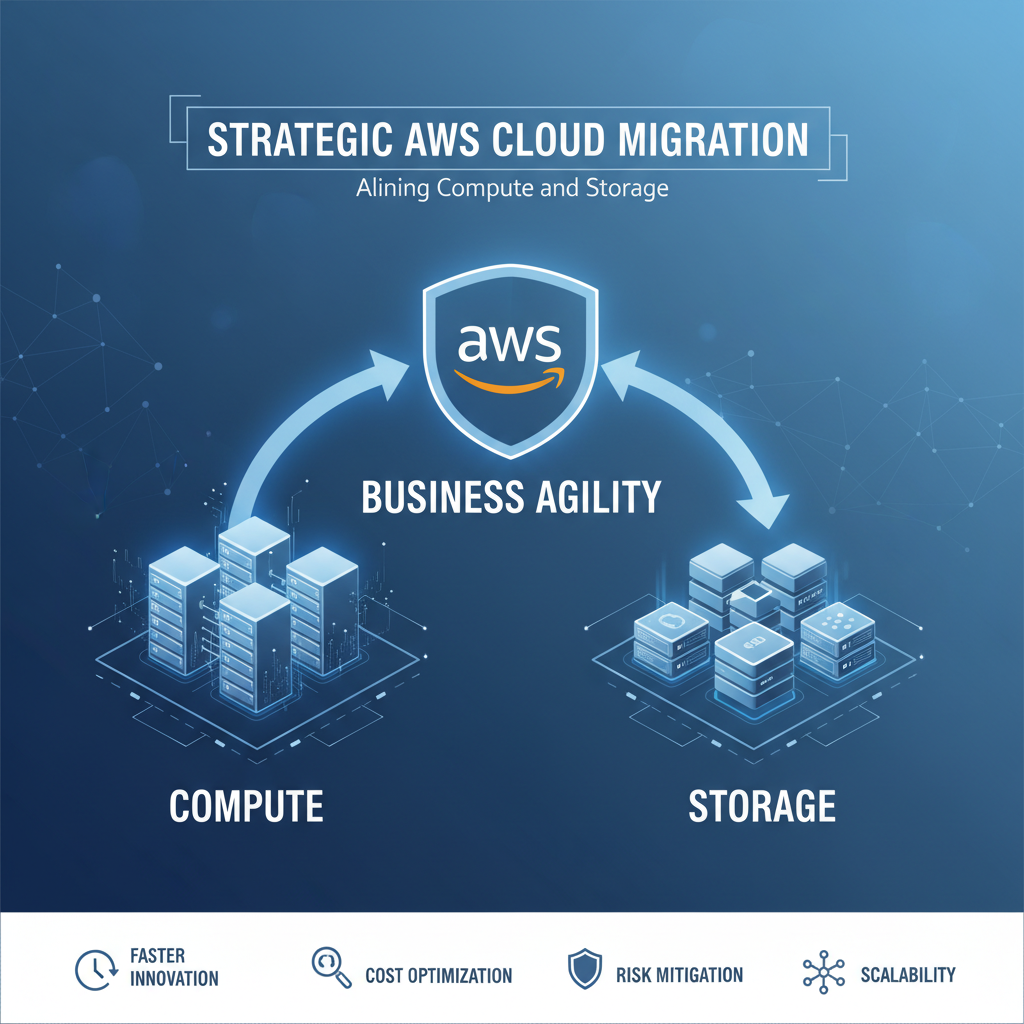
In today’s fast-paced digital landscape, businesses face constant pressure to innovate, scale, and deliver exceptional value. Many are looking to the cloud, specifically Amazon Web Services (AWS), as the answer. But a simple lift-and-shift isn’t enough. The real magic happens with a strategic AWS cloud migration – one that meticulously aligns your compute and storage resources for unparalleled business agility.
As we look to 2026 and beyond, the cloud is no longer just an option; it’s a strategic imperative. For enterprises, embracing AWS means more than just moving data; it’s about fundamentally transforming how you operate, innovate, and compete.
Why Strategic AWS Cloud Migration is Your Next Big Move
The decision to migrate to the cloud, especially AWS, comes with a host of compelling cloud adoption benefits that go far beyond mere infrastructure replacement.
Unlocking Core Benefits: Beyond Just Cost Savings
- Unmatched Scalability: Instantly scale resources up or down to meet fluctuating demand, avoiding costly over-provisioning or performance bottlenecks.
- Enhanced Security Posture: Leverage AWS’s robust, industry-leading security services and compliance certifications to protect your sensitive data.
- Cost Efficiency: Move from capital expenditure (CapEx) to operational expenditure (OpEx), paying only for what you use. Strategic planning further enables significant cloud cost optimization.
- Global Reach & Resilience: Deploy applications closer to your customers worldwide with AWS’s extensive global infrastructure, ensuring high availability and disaster recovery.
- Innovation Acceleration: Gain immediate access to cutting-edge AWS services like AI/ML, IoT, and analytics, empowering your teams to build and innovate faster.
The Heart of the Strategy: Aligning Compute and Storage
The cornerstone of a successful enterprise cloud migration lies in optimizing how your applications use compute and storage. It’s not just about moving them; it’s about making them smarter and more efficient in their new cloud home.
Right Compute, Right Performance
Compute resources are the engines of your applications. On AWS, this means choosing from a vast array of services like:
- Amazon EC2 Instances: Virtual servers with customizable CPU, memory, and networking, tailored for diverse workloads.
- AWS Lambda (Serverless): Run code without provisioning or managing servers, ideal for event-driven functions and microservices, paying only when your code executes.
- Amazon ECS/EKS (Containers): Orchestrate Docker containers for scalable and portable application deployments.
The goal is to optimize AWS compute storage by right-sizing instances, leveraging auto-scaling, and utilizing serverless architectures where appropriate to minimize costs while maximizing performance.
Intelligent Storage for Every Byte
Data is your most valuable asset, and AWS offers a diverse portfolio of storage solutions, each designed for specific needs:
- Amazon S3 (Object Storage): Highly scalable, durable, and cost-effective storage for unstructured data (backups, archives, data lakes, media files).
- Amazon EBS (Block Storage): High-performance block storage volumes for EC2 instances, ideal for databases and transactional workloads.
- Amazon EFS (File Storage): Scalable file storage for EC2 instances, perfect for shared file systems across multiple instances.
- Amazon Glacier: Extremely low-cost archive storage for data that is rarely accessed but needs to be retained for compliance or historical purposes.
Aligning these storage types with your data access patterns and durability requirements is critical for both performance and cost optimization.
The Power of Optimization and Automation
A truly strategic migration involves continuous optimization. This means:
- Automating Resource Provisioning: Using tools like AWS CloudFormation or Terraform to define and manage your infrastructure as code.
- Implementing FinOps Practices: A cultural practice that brings financial accountability to the variable spend model of cloud, helping teams make data-driven decisions on cloud usage.
- Monitoring and Adjusting: Continuously tracking performance and costs with AWS CloudWatch and Cost Explorer to identify areas for improvement and implement right-sizing.
Your Roadmap to a Successful AWS Migration Journey
An effective AWS cloud migration strategy follows a structured, phased approach to ensure a smooth transition and realize maximum value.
Phase 1: Assess and Plan Meticulously
This critical initial phase involves a deep dive into your existing infrastructure, applications, and dependencies. It’s about understanding what you have, how it works, and what it needs in the cloud. Key activities include:
- Discovery and Inventory of all IT assets.
- Application dependency mapping.
- Workload assessment (e.g., suitable for re-host, re-platform, refactor).
- Defining migration goals, success metrics, and a detailed migration plan.
- Establishing a robust security and compliance framework.
Phase 2: Execute with Precision
With a solid plan in place, the execution phase involves the actual migration of applications and data. This often starts with a pilot migration of non-critical workloads to validate the plan and build internal expertise, followed by a phased mass migration. Tools and services like AWS Migration Hub, AWS Application Migration Service (MGN), and AWS DataSync play a crucial role here.
Phase 3: Optimize, Innovate, and Grow
Migration isn’t the finish line; it’s a new beginning. Post-migration, the focus shifts to continuous optimization, cost management, and leveraging advanced AWS services for AWS modernization. This includes:
- Performance tuning of compute and storage.
- Implementing advanced security features.
- Adopting serverless architectures or containers for suitable applications.
- Integrating AI/ML services to unlock new business capabilities.
Navigating the Waters: Mitigating Migration Risks
While the benefits are immense, cloud migration, like any major IT transformation, comes with potential challenges. Proactive AWS migration risk mitigation is essential for a smooth journey.
Common Pitfalls and Proactive Solutions
- Data Security & Compliance: Implement strong encryption (in transit and at rest), granular access controls (IAM), and adhere to compliance frameworks from day one.
- Downtime & Business Disruption: Plan for staged migrations, utilize high-availability architectures, and conduct thorough testing with rollback strategies.
- Cost Overruns: Implement FinOps practices, monitor spending diligently, right-size resources, and leverage AWS cost management tools.
- Skill Gaps: Invest in training for your internal teams or partner with experienced cloud experts who can bridge knowledge gaps and accelerate your migration.
- Application Complexity: Thoroughly map dependencies and use incremental migration strategies. Refactor complex legacy applications gradually.
Unleash Business Agility with Sita Infobytes
A strategic AWS cloud migration is more than just a technical project; it’s a fundamental shift towards a more agile, resilient, and innovative business. By meticulously aligning your compute and storage, you empower your organization to respond faster to market changes, deliver better customer experiences, and unlock new avenues for growth.
Don’t navigate the complexities of cloud migration alone. At Sita Infobytes, we specialize in crafting bespoke AWS cloud strategies that align with your unique business objectives, ensuring a seamless migration and sustained agility. Our experts guide you through every phase, from initial assessment and planning to execution, optimization, and continuous innovation.
Ready to transform your business with a strategic AWS cloud migration? Partner with Sita Infobytes and unlock the full potential of the cloud.