Agentic AI: The Next Frontier in Business Transformation
In the rapidly evolving landscape of artificial intelligence, a new paradigm is emerging that promises to redefine how businesses operate: Agentic AI. Moving beyond the reactive capabilities of traditional AI or even the advanced content generation of large language models, Agentic AI introduces autonomous intelligence. These AI agents can understand complex goals, break them down into actionable steps, execute tasks, learn from their environment, and adapt their strategies to achieve desired outcomes without constant human oversight.
As we navigate 2026, the question for businesses isn’t if AI will impact them, but rather how they will harness its most advanced forms. Agentic AI is not just about automation; it’s about intelligent autonomy that can drive unprecedented efficiency, innovation, and strategic advantage.
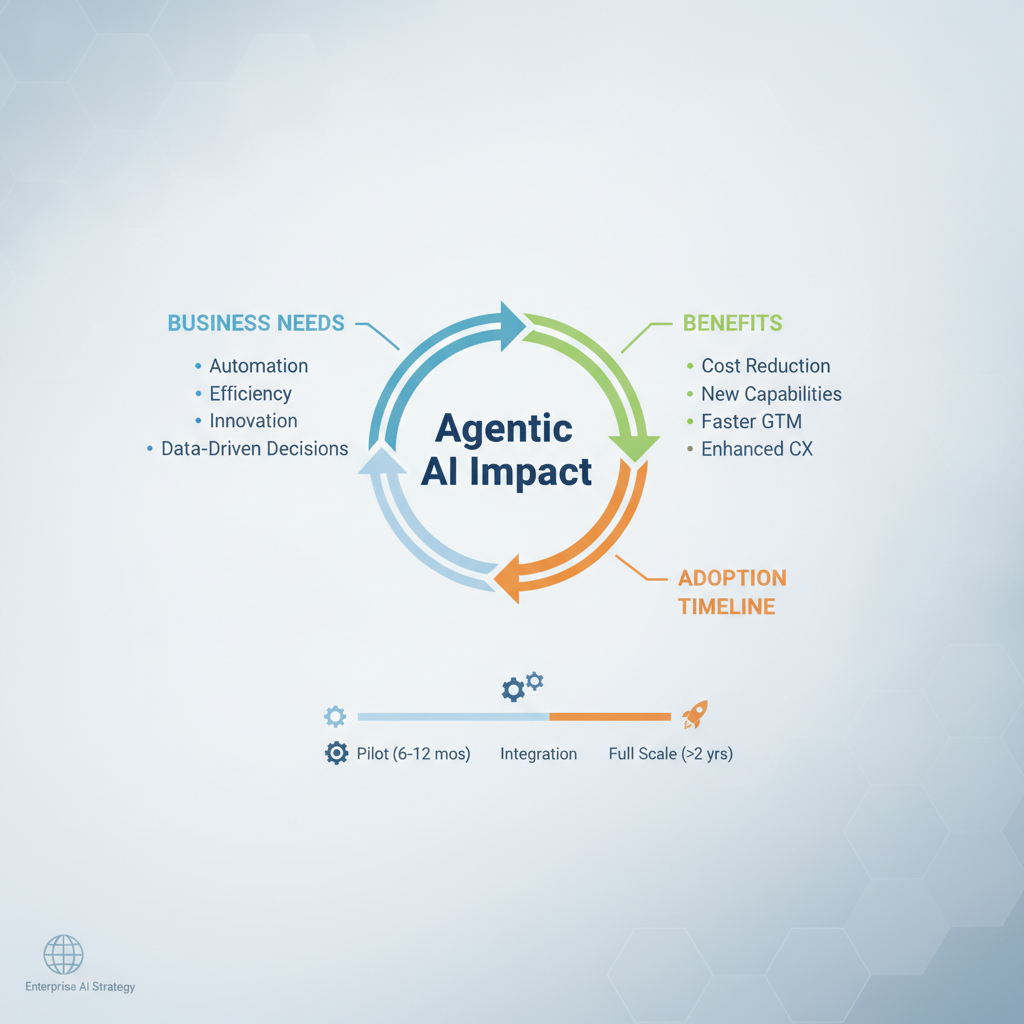
Why Businesses Urgently Need Agentic AI Now
The imperative for businesses to adopt Agentic AI stems from several critical challenges and opportunities:
- Escalating Complexity: Modern businesses grapple with vast datasets, intricate workflows, and dynamic market conditions. Human teams struggle to process and react at the necessary speed and scale.
- Demand for Hyper-Efficiency: The relentless pressure to optimize operations, reduce costs, and eliminate human error drives the need for systems that can perform multi-step tasks flawlessly and tirelessly.
- Innovation & Agility: To remain competitive, companies must innovate faster and adapt more swiftly than ever before. Agentic AI can free up human capital for creative and strategic endeavors.
- Talent Gaps & Augmentation: Specialized skills are often scarce. Agentic AI can augment existing teams, automating routine and complex tasks, allowing human experts to focus on higher-value activities.
- Personalization at Scale: Delivering highly personalized experiences to millions of customers demands an AI that can understand individual needs and act upon them autonomously across various touchpoints.
Key Benefits of Embracing Agentic AI
The adoption of Agentic AI offers a transformative suite of benefits that directly address the modern business landscape:
- Autonomous Task Execution: Imagine an AI agent managing your supply chain, from predicting demand to placing orders and tracking logistics, all while adapting to real-time disruptions. This extends to customer service resolution, financial analysis, and personalized marketing campaigns.
- Enhanced Operational Efficiency: By automating multi-step processes, Agentic AI significantly reduces manual intervention, speeds up execution times, and minimizes errors, leading to substantial cost savings and improved resource utilization.
- Improved Decision-Making: AI agents can gather, synthesize, and analyze information from myriad sources far quicker than humans, providing actionable insights and even making routine operational decisions autonomously, backed by data.
- Unlocking Innovation: By taking over routine and even complex operational tasks, Agentic AI frees human employees to engage in creative problem-solving, strategic planning, and developing new products and services.
- Hyper-Personalization & Customer Experience: Agentic systems can create truly bespoke customer journeys, delivering tailored content, support, and recommendations proactively, leading to higher satisfaction and loyalty.
- Scalability & Flexibility: Businesses can scale operations rapidly without a linear increase in human resources. Agentic AI systems can be deployed and reconfigured to meet fluctuating demands, offering unparalleled flexibility.
The Agentic AI Adoption Timeline: What to Expect by 2029 and Beyond
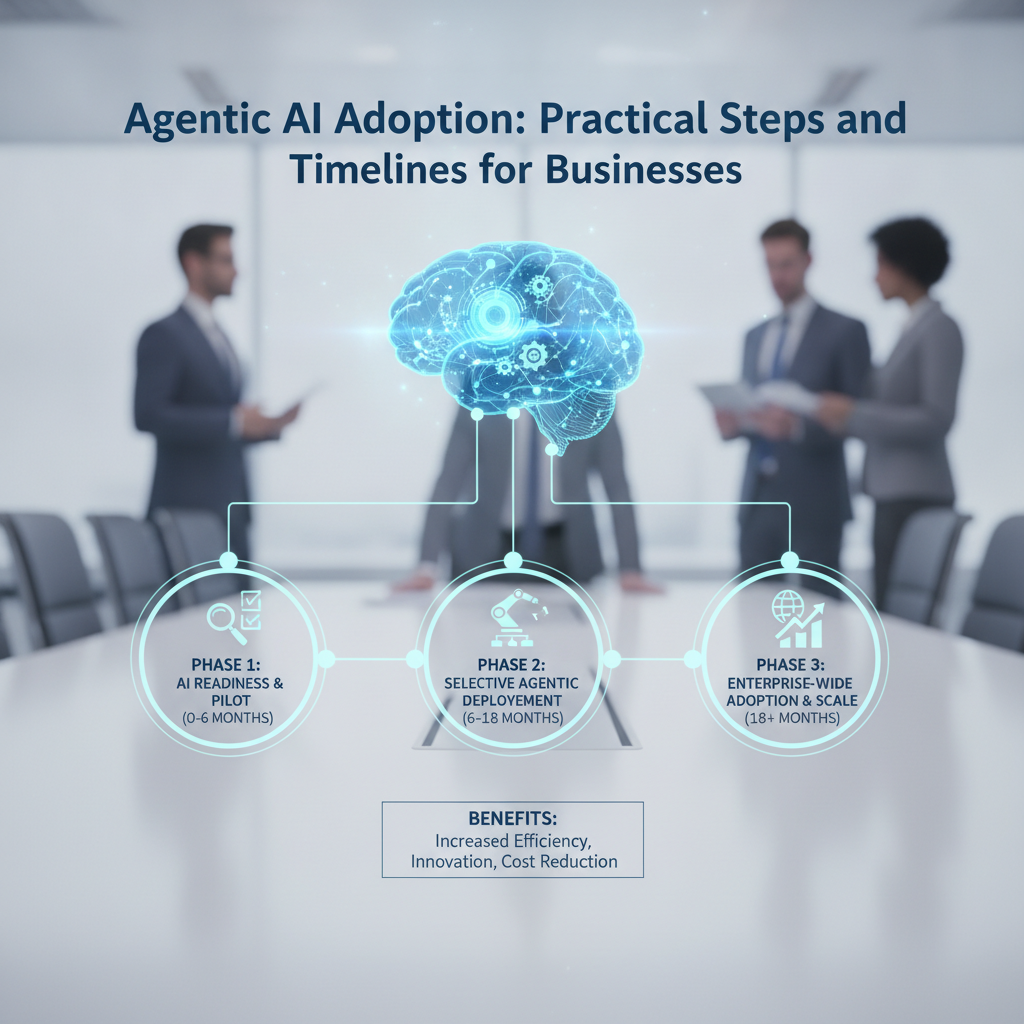
The journey to full Agentic AI integration will be phased, reflecting a careful balance of innovation, governance, and organizational readiness.
Phase 1: Pilot Programs & Task-Specific Agents (2026-2027)
- Focus: Targeted, high-ROI use cases within specific departments.
- Examples: AI agents for automated lead qualification, initial customer support triage and resolution, advanced data extraction and entry, basic legal document review, and code generation for developers.
- Characteristics: Integration with existing systems, focus on well-defined problems, clear performance metrics, and human oversight as a primary component.
Phase 2: Expansion & Cross-Functional Collaboration (2027-2029)
- Focus: Integrating multi-agent systems across departments and tackling more complex, interconnected workflows.
- Examples: AI agents collaborating to manage entire marketing campaigns, end-to-end employee onboarding processes, proactive IT incident resolution, and personalized educational content delivery.
- Characteristics: Greater autonomy with robust governance frameworks, ethical AI guidelines becoming standard, and significant workforce upskilling to manage and collaborate with AI agents.
Phase 3: Strategic Autonomy & Enterprise-Wide Ecosystems (2029+)
- Focus: Fully autonomous, self-optimizing business processes and strategic decision support across the entire enterprise.
- Examples: AI agents dynamically managing supply chains based on global events, strategic market forecasting and automated response, personalized product development cycles, and self-optimizing business models.
- Characteristics: Deep integration into core business strategy, transformative impact on competitive landscapes, continuous learning and adaptation, and a shift towards human-AI symbiotic leadership.
Crafting Your Enterprise Agentic AI Strategy
To successfully navigate this transformative shift, businesses must develop a clear, proactive strategy:
- Identify High-Impact Areas: Begin by pinpointing business functions where Agentic AI can solve critical pain points or unlock significant value with manageable risk.
- Build a Robust Data Foundation: Agentic AI thrives on quality data. Invest in data cleanliness, accessibility, and robust data governance to feed your AI agents effectively.
- Prioritize Talent Upskilling: Prepare your workforce. Employees will need to transition from performing tasks to managing, overseeing, and strategically collaborating with AI agents.
- Establish Ethical AI Governance: Develop clear policies for AI agent behavior, accountability, transparency, and data privacy from the outset. Trust and ethical deployment are paramount.
- Focus on Security: Implement robust cybersecurity measures to protect your AI systems and the sensitive data they process from potential threats.
- Seek Expert Partnerships: Collaborate with AI specialists and solution providers like Sita Infobytes who can guide you through the complexities of Agentic AI adoption, from strategy to implementation.
The Future is Agentic
Agentic AI represents more than just an incremental improvement; it’s a fundamental shift in how businesses will operate, innovate, and compete. As we move further into 2026 and beyond, businesses that proactively embrace and strategically implement Agentic AI will not only achieve unparalleled operational efficiency but also redefine their market leadership.
Ready to explore how Agentic AI can transform your business? Don’t get left behind. Contact Sita Infobytes today to strategize your enterprise AI journey. Visit our Contact Us page to get started!