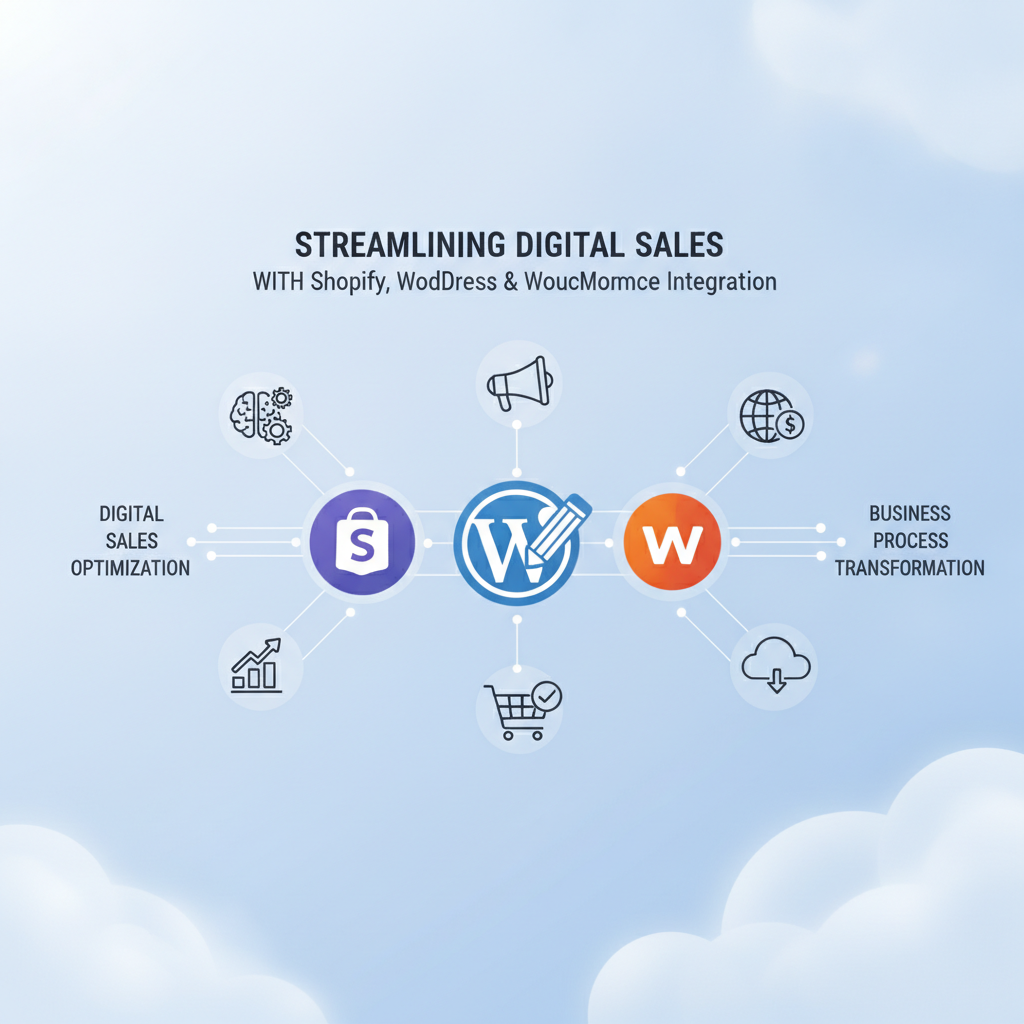
Unlock Next-Level Growth: Streamlining Digital Sales with Shopify, WordPress & WooCommerce Integration
Digital sales are the heartbeat of modern businesses. As we move further into 2026, the landscape is more competitive and dynamic than ever. Businesses are constantly seeking ways to optimize their online presence, enhance customer journeys, and drive conversions. While platforms like Shopify and WordPress with WooCommerce offer powerful standalone solutions, the real game-changer lies in their intelligent integration. This approach isn’t just about using multiple tools; it’s about creating a unified, efficient, and highly effective digital sales ecosystem.
Why Integration Matters for Digital Sales
In today’s fast-paced digital world, a disjointed online presence can lead to missed opportunities, operational inefficiencies, and a fragmented customer experience. Integrating your e-commerce and content platforms addresses these challenges head-on:
- Centralized Management: Simplify inventory, order, and customer data management across different sales channels.
- Enhanced Customer Experience: Provide a consistent brand message and seamless journey from content discovery to purchase.
- Data Synchronization: Ensure all your platforms are working with the most current information, reducing errors and improving decision-making.
- Scalability and Flexibility: Adapt quickly to market changes and expand your operations without needing to re-platform.
Understanding the Key Players
Before diving into integration strategies, let’s briefly look at the strengths of each platform:
WordPress: The Content Powerhouse
WordPress powers over 40% of the internet, renowned for its flexibility, vast plugin ecosystem, and exceptional SEO capabilities. It’s the go-to platform for blogs, corporate websites, and content marketing, allowing businesses to build strong organic visibility and authority.
WooCommerce: E-commerce on WordPress
As a free plugin for WordPress, WooCommerce transforms any WordPress site into a fully functional online store. It offers extensive customization, a huge community, and a wide array of extensions, making it ideal for businesses seeking deep control over their e-commerce environment.
Shopify: The All-in-One E-commerce Giant
Shopify is a leading hosted e-commerce platform known for its ease of use, robust features, excellent scalability, and comprehensive sales tools. It handles everything from store setup to payments, shipping, and marketing, making it a popular choice for businesses of all sizes looking for a streamlined e-commerce solution.
The Power of Integration for Streamlining Sales
The magic happens when these platforms work together. Here are a couple of powerful integration scenarios:
Scenario 1: WordPress & WooCommerce as Your Core, Shopify for Specific Needs
Imagine your main online store is built on WordPress with WooCommerce, offering maximum customization and leveraging WordPress’s content marketing prowess. You might then integrate Shopify for:
- Niche Product Lines: Run a separate, specialized Shopify store for a specific product category.
- Flash Sales or Pop-up Shops: Quickly deploy a Shopify store for limited-time promotions without impacting your main WooCommerce site.
- International Expansion: Use Shopify’s localized features for specific global markets while your primary content remains on WordPress.
This “hybrid” approach allows you to leverage the strengths of both – the content and SEO power of WordPress/WooCommerce and the streamlined sales and global reach of Shopify. Integration tools ensure product catalogs, orders, and customer data are synchronized effortlessly.
Scenario 2: WordPress as Your Content Hub, Shopify as Your Sales Machine (Headless Commerce)
In this popular setup, WordPress serves as your primary content management system (CMS). You publish blogs, landing pages, and engaging content that drives traffic and builds brand authority. All your actual products and checkout processes, however, are handled by Shopify.
- Seamless User Journey: Visitors discover your products through compelling WordPress content and smoothly transition to a Shopify-powered cart and checkout with a consistent brand experience.
- Maximized SEO: WordPress excels at SEO, helping you rank higher for relevant keywords and attract more organic traffic.
- Performance & Security: Shopify handles the transactional heavy lifting, ensuring fast, secure checkouts and reducing the burden on your WordPress site.
This “headless” approach allows each platform to do what it does best, resulting in superior performance, flexibility, and a truly streamlined sales funnel.
Benefits of This Integrated Approach
Embracing an integrated strategy for Shopify, WordPress, and WooCommerce delivers profound benefits for your digital sales:
- Unmatched Operational Efficiency: Automate data synchronization, inventory updates, and order processing across platforms, significantly reducing manual effort and errors.
- Superior Customer Experience: Offer a cohesive brand narrative, personalized content, and a smooth checkout process, fostering loyalty and repeat purchases.
- Robust Scalability: Your setup can grow with your business. Whether you’re adding new products, expanding into new markets, or handling seasonal spikes, your integrated system is ready.
- Data-Driven Insights: Consolidate sales, customer, and content performance data to make more informed decisions and refine your digital strategy.
- Enhanced Marketing & SEO: Leverage WordPress’s content marketing strengths to attract and engage audiences, while Shopify ensures smooth conversions.
Key Considerations for a Successful Integration
Implementing such an integration requires careful planning:
- Define Your Strategy: Clearly outline your business goals and how each platform will contribute.
- Choose the Right Tools: Select reliable integration plugins, APIs, or custom development solutions that fit your needs.
- Data Mapping: Ensure consistent product IDs, customer fields, and order statuses across all platforms.
- Security & Maintenance: Regular updates and security checks are crucial for all connected systems.
- Professional Expertise: For complex integrations, partnering with experienced developers ensures a smooth, secure, and future-proof setup.
Conclusion
In the ever-evolving world of digital sales, staying ahead means embracing innovative solutions. Integrating Shopify, WordPress, and WooCommerce isn’t just a technical task; it’s a strategic move to future-proof your business, enhance efficiency, and deliver an unparalleled customer experience. By combining the strengths of these powerful platforms, you can truly streamline your digital sales operations and unlock new levels of growth in 2026 and beyond.
Ready to transform your digital sales strategy with a seamless multi-platform integration? Don’t let complexity hold you back. Contact Sita Infobytes today to discuss how our expert team can help you design, implement, and optimize a tailored Shopify, WordPress, and WooCommerce integration solution for your business!