Navigating the Cloud: Ensuring Uninterrupted Business During AWS Migration
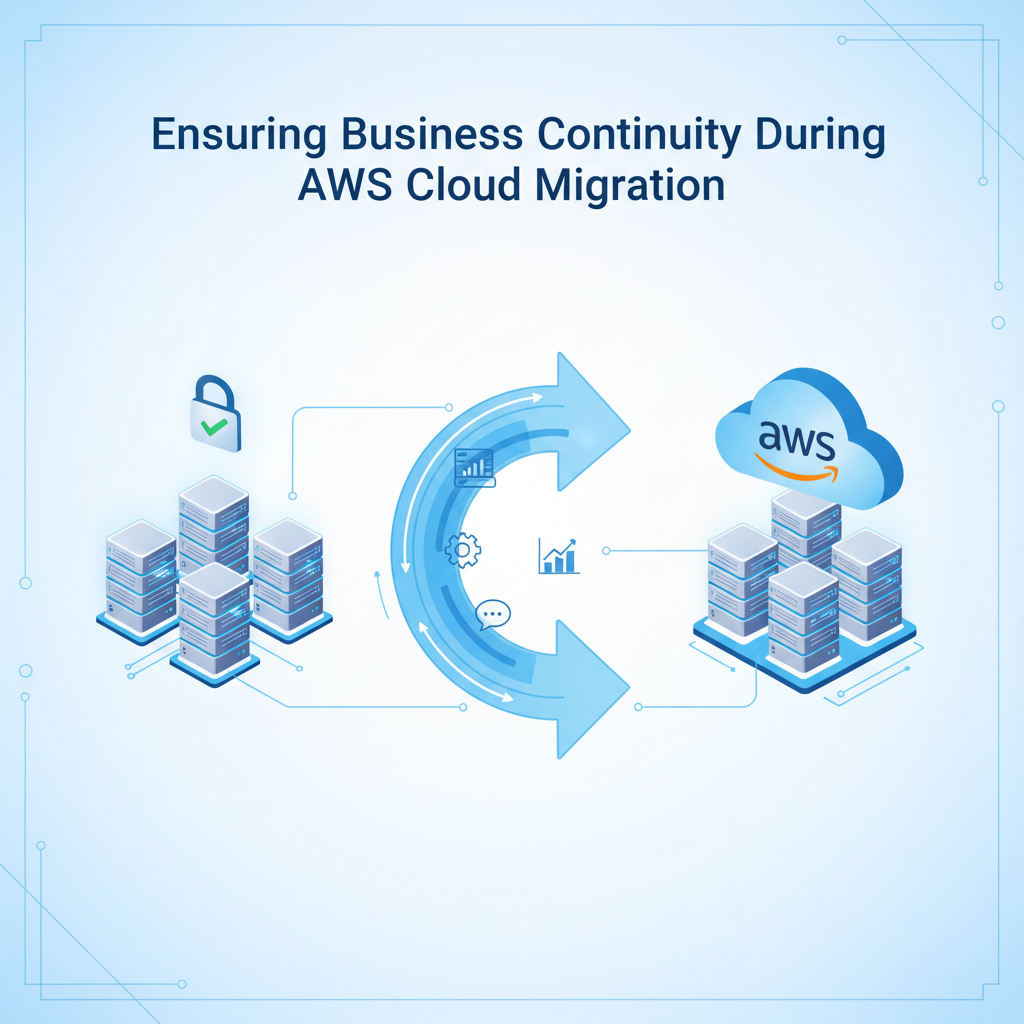
In 2026, the shift to cloud computing isn’t just a trend; it’s a strategic imperative for businesses aiming for agility, scalability, and cost-efficiency. Amazon Web Services (AWS) stands at the forefront of this transformation, offering a robust platform for modernizing your IT infrastructure. However, the journey to the cloud, particularly an AWS cloud migration, can feel daunting. The biggest concern for many organizations? Maintaining business continuity – ensuring that operations remain seamless and uninterrupted throughout the migration process.
At Sita Infobytes, we understand that downtime isn’t an option. A botched migration can lead to significant financial losses, reputational damage, and operational chaos. This blog post will guide you through the critical strategies to ensure your business stays ‘always-on’ while migrating to AWS.
Why Business Continuity is Non-Negotiable During AWS Migration
Imagine your critical applications or customer-facing services going offline, even for a few minutes. The repercussions can be severe:
- Financial Loss: Every minute of downtime translates directly into lost revenue, especially for e-commerce, financial services, or real-time data processing companies.
- Reputational Damage: Customers expect uninterrupted service. Any disruption can erode trust and drive them to competitors.
- Operational Chaos: Internal teams become unproductive, scrambling to resolve issues rather than focusing on core business objectives.
- Compliance Issues: Certain industries have strict uptime requirements, and failure to meet them can result in penalties.
Therefore, a well-planned AWS cloud migration strategy must prioritize business continuity from the outset.
Key Strategies for Seamless AWS Cloud Migration with Zero Downtime
1. Comprehensive Planning and Assessment (The Foundation)
The success of your migration hinges on meticulous planning. Before a single workload moves, you need a deep understanding of your current environment:
- Application Discovery: Identify all applications, their interdependencies, and their critical importance to your business.
- Dependency Mapping: Understand how applications communicate with databases, other services, and external systems.
- Performance Baselines: Document current performance metrics to establish benchmarks for post-migration validation.
- RTO/RPO Objectives: Define your Recovery Time Objective (RTO – how quickly systems must be back online) and Recovery Point Objective (RPO – how much data loss is acceptable) for each workload. These will dictate your disaster recovery strategy in AWS.
This initial phase helps identify potential cloud migration risks and build a robust plan to mitigate them.
2. Phased Migration Approach (Crawl, Walk, Run)
Attempting a “big bang” migration of everything at once is a recipe for disaster. Instead, adopt a phased approach:
- Pilot Projects: Start with non-critical applications to gain experience and refine your processes.
- Wave-Based Migration: Group related applications into waves. Migrate one wave at a time, allowing for thorough testing and validation before proceeding to the next.
- Migration Strategies: Employ the right migration strategy for each workload (e.g., Rehost/Lift-and-Shift for quick wins, Replatform for minor optimizations, Refactor for full cloud-native benefits). Each strategy has different implications for downtime.
This systematic approach minimizes exposure and helps manage potential business continuity in cloud challenges.
3. Robust Disaster Recovery (DR) and Backup Solutions
AWS offers powerful native services to ensure data protection and rapid recovery:
- AWS Backup: Centrally manage backups for various AWS services (EBS volumes, RDS databases, EC2 instances, etc.).
- AWS Elastic Disaster Recovery (DRS): Automate replication and recovery of on-premises and cloud-based applications to AWS.
- S3 Versioning and Replication: Protect your data in Amazon S3 with versioning and cross-region replication for extra resilience.
- Automated Snapshots: Utilize automated snapshots for databases like Amazon RDS and Amazon EBS volumes.
Implementing a comprehensive DR plan is crucial for safeguarding against unforeseen issues during and after migration, solidifying your business continuity in cloud strategy.
4. Continuous Monitoring and Performance Testing
Visibility into your systems during migration is paramount:
- Pre-Migration Benchmarks: Establish performance baselines before moving to identify any degradation.
- Post-Migration Validation: Rigorously test applications in the AWS environment to ensure they meet performance, security, and functional requirements.
- AWS Monitoring Tools: Leverage Amazon CloudWatch for metrics and logs, AWS X-Ray for application performance insights, and AWS Config for resource configuration history.
- Automated Alerts: Set up alerts for critical metrics to quickly identify and address anomalies.
Thorough testing and monitoring prevent surprises and validate your AWS zero downtime migration efforts.
5. Implementing a Solid Rollback Plan
Even with the best planning, unforeseen issues can arise. A well-defined rollback plan acts as your safety net:
- Defined Triggers: Clearly establish the criteria that would necessitate a rollback (e.g., performance degradation, critical errors, security breaches).
- Rollback Procedures: Document step-by-step instructions for reverting to the previous on-premises or pre-migration state.
- Regular Testing: Just like your migration plan, your rollback plan should be tested to ensure its viability.
Having a robust rollback strategy minimizes the impact of potential cloud migration risks.
6. Security and Compliance from Day One
Security isn’t an afterthought; it’s an integral part of your AWS cloud migration strategy:
- Identity and Access Management (IAM): Implement the principle of least privilege, ensuring users and applications only have the access they need.
- Network Security: Utilize AWS security groups and Network Access Control Lists (NACLs) to control traffic to and from your instances.
- Data Encryption: Encrypt data at rest and in transit using AWS Key Management Service (KMS) or other encryption options.
- Compliance: Ensure your AWS environment adheres to relevant industry and regulatory compliance frameworks (HIPAA, PCI DSS, GDPR, etc.).
Proactive security measures are key to mitigating cloud migration risks.
The Sita Infobytes Advantage: Your Partner in Flawless Migration
Navigating the complexities of an AWS cloud migration while ensuring business continuity requires specialized expertise. At Sita Infobytes, we offer comprehensive AWS migration consulting services, bringing years of experience and deep technical knowledge to your project. We help you design a tailored migration strategy, implement robust DR solutions, and manage the entire process with precision, minimizing risks and maximizing your return on investment.
Our team ensures that your transition to AWS is not just successful, but also seamless, secure, and maintains your business’s critical operations throughout.
Ready for a Smooth AWS Cloud Migration?
Don’t let the fear of downtime hold you back from the benefits of the AWS cloud. With the right strategy, tools, and an experienced partner, you can achieve a flawless migration with uninterrupted business operations. Empower your business for the future.
To discuss your AWS cloud migration needs and explore how Sita Infobytes can help you ensure business continuity, reach out to our experts today!
Contact Sita Infobytes for a seamless cloud migration consultation.