Supercharge Your Business: Optimizing Processes with Shopify, WordPress & WooCommerce in 2026
In the dynamic business landscape of 2026, staying competitive means more than just having an online presence; it means having an optimized one. Digital transformation is no longer an option but a necessity, and at its heart lies the smart integration of powerful platforms. For many businesses, the trifecta of Shopify, WordPress, and WooCommerce offers unparalleled opportunities to streamline operations, enhance customer experiences, and drive significant growth. But how do you harness their full potential?
At Sita Infobytes, we believe in empowering businesses to achieve peak efficiency. Let’s explore how these platforms can revolutionize your business processes.
Why Process Optimization is Crucial for Digital Transformation
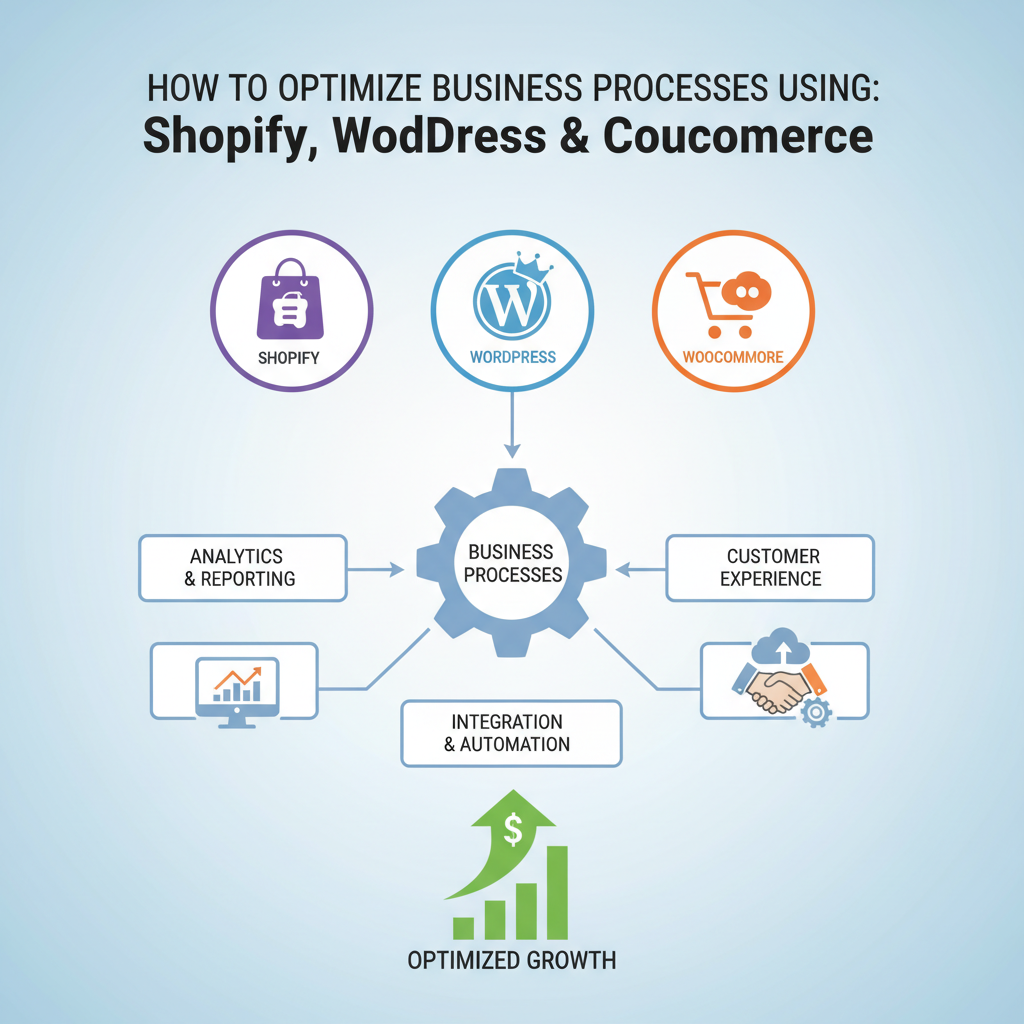
Digital transformation isn’t just about adopting new tech; it’s about fundamentally changing how your business operates. The digital transformation benefits are immense: increased efficiency, reduced operational costs, superior customer satisfaction, and invaluable data insights. Optimized processes mean:
- Faster Operations: Automating repetitive tasks frees up your team for strategic work.
- Better Customer Experience: Seamless interactions from browsing to post-purchase support.
- Scalability: Your systems can effortlessly handle growth without breaking down.
- Cost Savings: Reduced manual effort and errors lead to a healthier bottom line.
- Data-Driven Decisions: Integrated systems provide comprehensive insights for smarter strategies.
Shopify: Mastering E-commerce Operations
Shopify is a powerhouse for e-commerce, renowned for its user-friendliness and robust features. For Shopify process optimization, focus on:
- Automated Order & Inventory Management: Utilize Shopify’s native tools and app integrations (like inventory management apps) to automatically track stock levels, generate shipping labels, and fulfill orders. This minimizes manual entry and reduces errors.
- Streamlined Checkout Experience: Optimize your checkout flow for speed and simplicity. Consider one-page checkouts, guest checkout options, and integrated payment gateways to reduce cart abandonment.
- Marketing Automation: Leverage Shopify’s marketing tools or third-party apps for automated email campaigns (welcome series, abandoned cart reminders), personalized product recommendations, and segmented customer outreach.
- Customer Service Integration: Connect your Shopify store with CRM or customer support platforms to centralize customer queries and order history, providing faster, more informed support.
WordPress: The Hub for Content & Business Integration
WordPress, powering over 40% of the web, is far more than just a blogging platform. For WordPress business integration, think about it as your central content and information hub:
- Content Marketing Powerhouse: Use WordPress to drive traffic and engage potential customers with high-quality blogs, articles, and guides that naturally lead them to your products or services.
- CRM Integration: Connect your WordPress site with customer relationship management (CRM) systems (e.g., HubSpot, Salesforce) to capture leads from forms, track interactions, and manage customer data effectively.
- Membership & Booking Systems: Implement plugins for membership sites, online course platforms, or booking systems (for services, appointments) to automate scheduling and access control.
- Lead Generation & Nurturing: Integrate email marketing tools and landing page builders to automate lead capture, segmentation, and nurturing sequences.
WooCommerce: Flexible E-commerce Workflow Improvement
For businesses looking for deep customization and control over their online store, WooCommerce, the e-commerce plugin for WordPress, is ideal. Its open-source nature allows for extensive WooCommerce workflow improvement:
- Custom Product Configurations: Automate complex product variations, bundles, and subscription models using specific WooCommerce extensions. This can simplify ordering processes for unique items.
- Advanced Shipping & Tax Rules: Implement sophisticated shipping calculations and tax rules based on location, product weight, or order value, ensuring accuracy and reducing manual adjustments.
- Automated Reporting & Analytics: Utilize WooCommerce reports and integrate with external analytics tools to automatically track sales, customer behavior, and inventory performance, giving you real-time insights without manual data compilation.
- Integration with ERP & Accounting Systems: Connect WooCommerce with your Enterprise Resource Planning (ERP) and accounting software to automatically sync orders, customer data, and financial records, eliminating duplicate data entry.
The Synergy: Making Them Work Together
The true magic happens when you leverage these platforms in harmony. Imagine:
- A WordPress blog drives organic traffic and educates customers, directing them to a seamless e-commerce experience on a Shopify store or a highly customized WooCommerce shop.
- WordPress handles lead generation and content distribution, while Shopify/WooCommerce manages product sales, inventory, and order fulfillment.
- Data collected from your e-commerce platform flows back into your WordPress-integrated CRM for personalized marketing and customer service.
Ready to Transform Your Business?
Optimizing your business processes with Shopify, WordPress, and WooCommerce in 2026 is about creating a cohesive, efficient, and scalable digital ecosystem. It requires strategic planning, expert implementation, and continuous refinement.
If you’re looking to harness the power of these platforms for advanced digital transformation, streamline your operations, or enhance your e-commerce presence, Sita Infobytes is here to help. Our team specializes in crafting tailored solutions that drive efficiency and growth.
Reach out to us today to discuss your specific needs and learn how our services can elevate your business. Visit our Contact Us page to get started!