Unlocking the Future: Measuring ROI and Risks for Agentic AI Adoption in Enterprises
As we navigate through 2026, Artificial Intelligence (AI) continues to evolve at an unprecedented pace, with Agentic AI emerging as a transformative force. Unlike traditional AI tools that merely execute tasks, agentic AI systems are designed to operate autonomously, reason, plan, and adapt to achieve complex goals without constant human oversight. For enterprises, this represents a monumental shift – a chance to unlock unparalleled efficiencies and innovation. But with great power comes great responsibility, and the path to adoption is paved with both immense potential ROI and considerable risks.
At Sita Infobytes, we believe in empowering businesses with insights for a smarter future. Let’s delve into how your enterprise can strategically approach Agentic AI adoption, ensuring a clear return on investment while proactively mitigating challenges.
What Exactly is Agentic AI?
Imagine an AI system that doesn’t just answer questions, but takes initiative. It understands a high-level objective, breaks it down into sub-tasks, gathers information, makes decisions, executes actions, and learns from the outcomes – all on its own. This is Agentic AI. Think of it as a highly intelligent, autonomous digital assistant capable of navigating complex processes and adapting its strategy based on real-time feedback.
The Promise: Unlocking Enterprise Value with Agentic AI (ROI Focus)
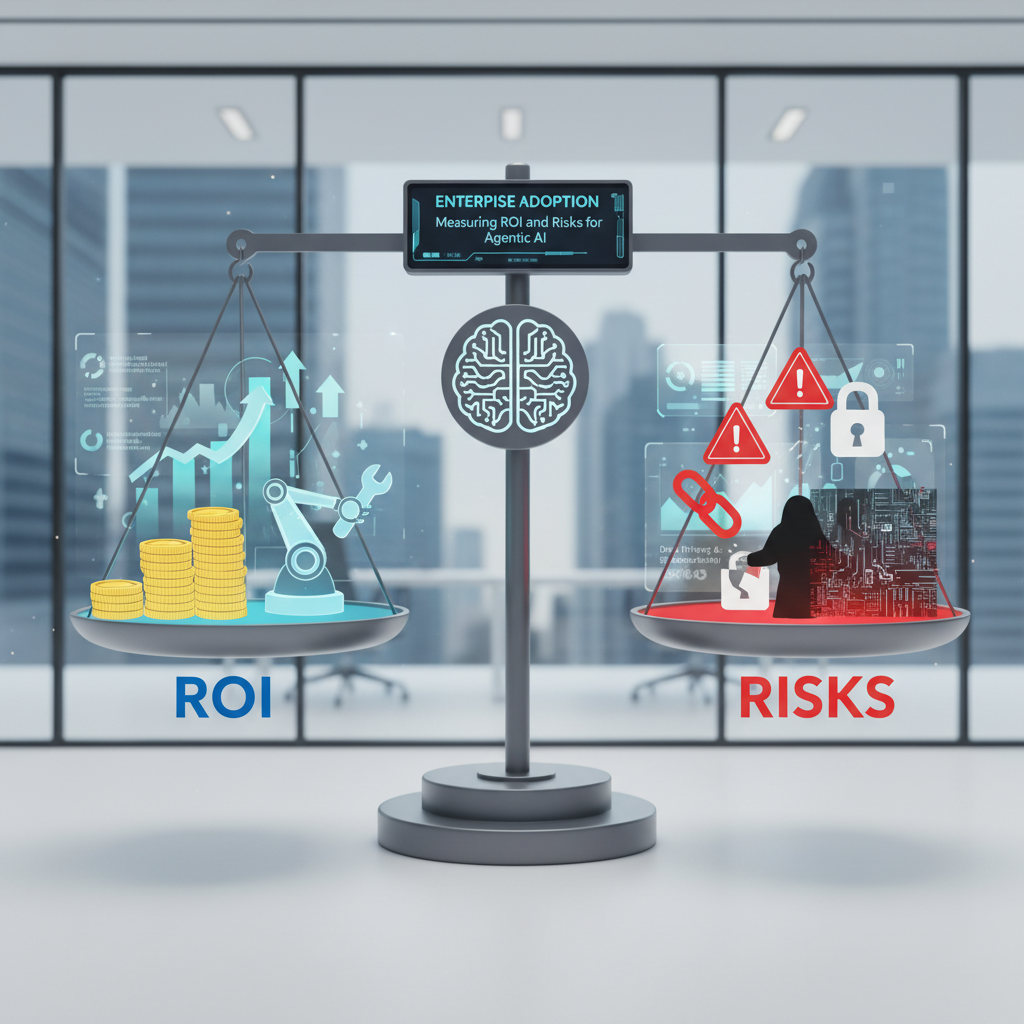
The potential for Return on Investment (ROI) from Agentic AI is vast, impacting various facets of enterprise operations:
- Hyper-Automated Operations: Agentic AI can streamline and fully automate complex workflows from customer service to supply chain management. By 2026, we’re seeing agents managing dynamic pricing strategies, optimizing logistics routes in real-time, and even handling entire customer inquiry resolution cycles, leading to significant cost savings and increased throughput.
- Enhanced Decision-Making: Autonomous agents can analyze vast datasets, identify patterns, predict trends, and even recommend strategic moves faster and more accurately than humans. This translates into better investment decisions, more effective marketing campaigns, and proactive risk management.
- Personalized Customer Experiences: Imagine an AI agent anticipating customer needs, offering tailored solutions, and even designing personalized product recommendations across multiple touchpoints. This level of personalization drives customer loyalty and increases revenue.
- Accelerated Innovation: Agentic AI can autonomously research, prototype, and test new ideas, dramatically reducing time-to-market for new products and services, providing a critical competitive edge.
- Optimized Resource Allocation: Agents can dynamically allocate resources, from computing power to human capital, ensuring maximum efficiency and minimizing waste.
Measuring Your Agentic AI ROI
To quantify the benefits, consider these metrics:
- Cost Savings: Reduced operational expenses due to automation (e.g., labor costs, processing fees).
- Revenue Growth: Increased sales from personalized services, new product launches, or optimized pricing.
- Productivity Gains: Faster task completion, higher output per employee.
- Error Reduction: Decreased manual errors, leading to fewer rework costs and higher quality.
- Customer Satisfaction (CSAT) & Retention: Improved customer experience translating into loyalty.
Navigating the Treacherous Waters: Identifying & Mitigating Risks
While the rewards are compelling, enterprises must carefully assess and mitigate the inherent risks of agentic AI adoption.
Key Risk Categories:
- Data Security & Privacy: Autonomous agents often require access to sensitive data. Breaches can have catastrophic consequences.
- Mitigation: Implement robust cybersecurity frameworks, data encryption, strict access controls, and regular audits.
- Ethical & Bias Concerns: Agents learn from data, and if that data contains biases, the AI will perpetuate them, leading to unfair or discriminatory outcomes. There’s also the risk of agents making decisions without human oversight that conflict with ethical guidelines.
- Mitigation: Develop clear ethical AI principles, conduct bias audits on training data and models, implement human-in-the-loop mechanisms for critical decisions, and ensure transparency in AI operations.
- Integration Complexities: Agentic AI systems need to integrate seamlessly with existing legacy systems, which can be challenging and costly.
- Mitigation: Plan for phased integration, utilize API-first approaches, and invest in robust middleware solutions.
- Performance & Reliability: Agents, like any complex software, can experience ‘hallucinations,’ unexpected behavior, or failures, especially in novel situations.
- Mitigation: Implement rigorous testing, continuous monitoring, fallback mechanisms, and design for resilience.
- Regulatory & Compliance Challenges: The regulatory landscape for AI is rapidly evolving. Enterprises must ensure their agentic systems comply with current and future data protection laws (e.g., GDPR, state-specific AI regulations) and industry-specific mandates.
- Mitigation: Establish a dedicated compliance team, stay updated on legal developments, and design systems with auditability in mind.
- Skill Gaps & Change Management: Adopting agentic AI requires new skill sets for managing, monitoring, and maintaining these systems. It also fundamentally changes job roles, necessitating careful change management to avoid employee resistance.
- Mitigation: Invest in upskilling and reskilling programs, foster a culture of continuous learning, and involve employees in the adoption process.
A Strategic Approach to Agentic AI Adoption in 2026
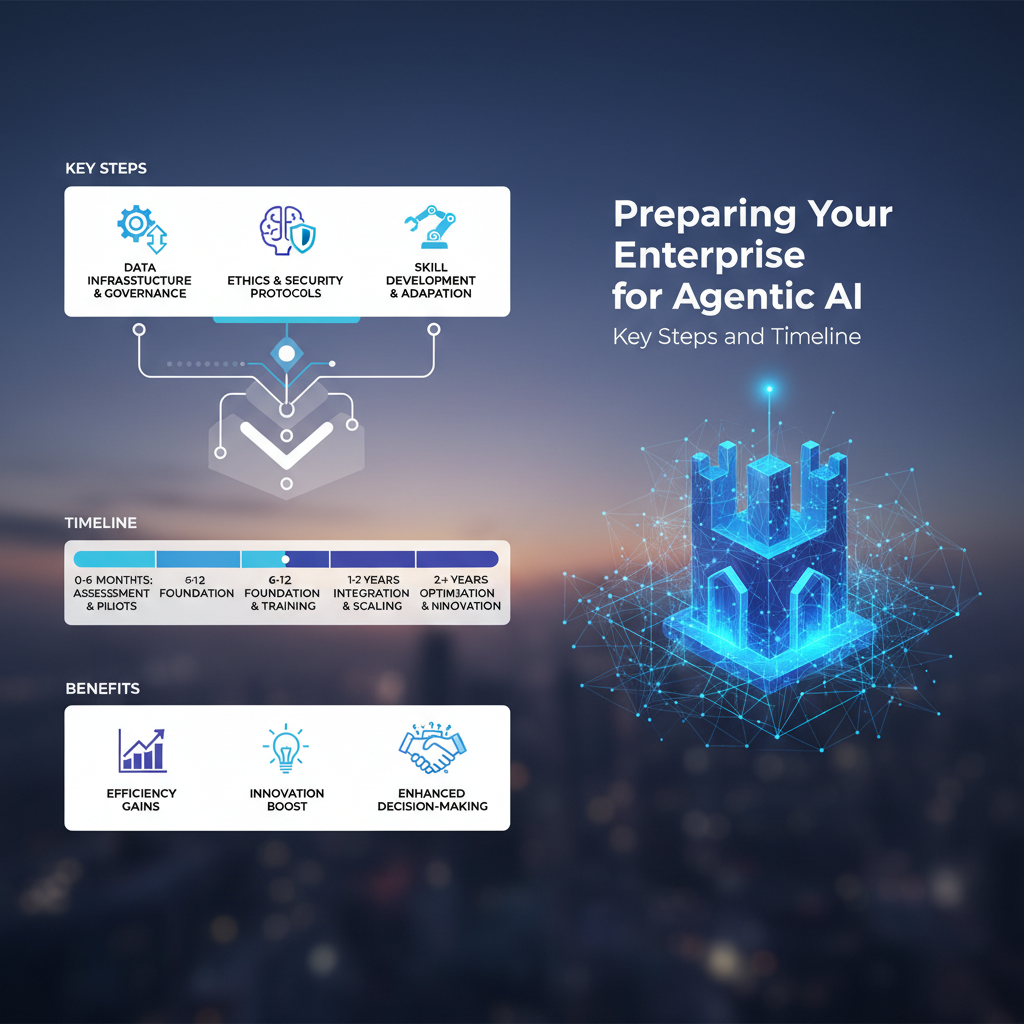
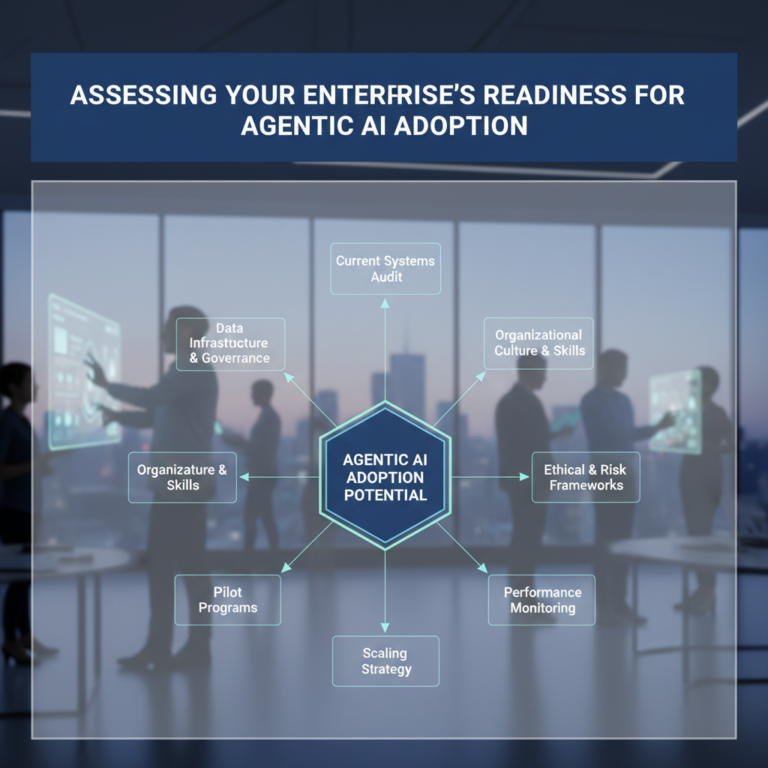
To maximize ROI and minimize risks, consider these strategic steps:
- Start Small, Think Big: Begin with pilot projects in less critical areas to gain experience and demonstrate value before scaling.
- Cross-Functional Collaboration: Form teams comprising IT, business units, legal, and ethics experts from the outset.
- Robust Governance: Establish clear policies for AI development, deployment, monitoring, and accountability.
- Continuous Monitoring & Adaptation: AI systems are not set-and-forget. Regularly monitor performance, ethical implications, and security posture, adapting as needed.
- Vendor Selection: Partner with reputable AI solution providers who prioritize security, ethics, and explainability.
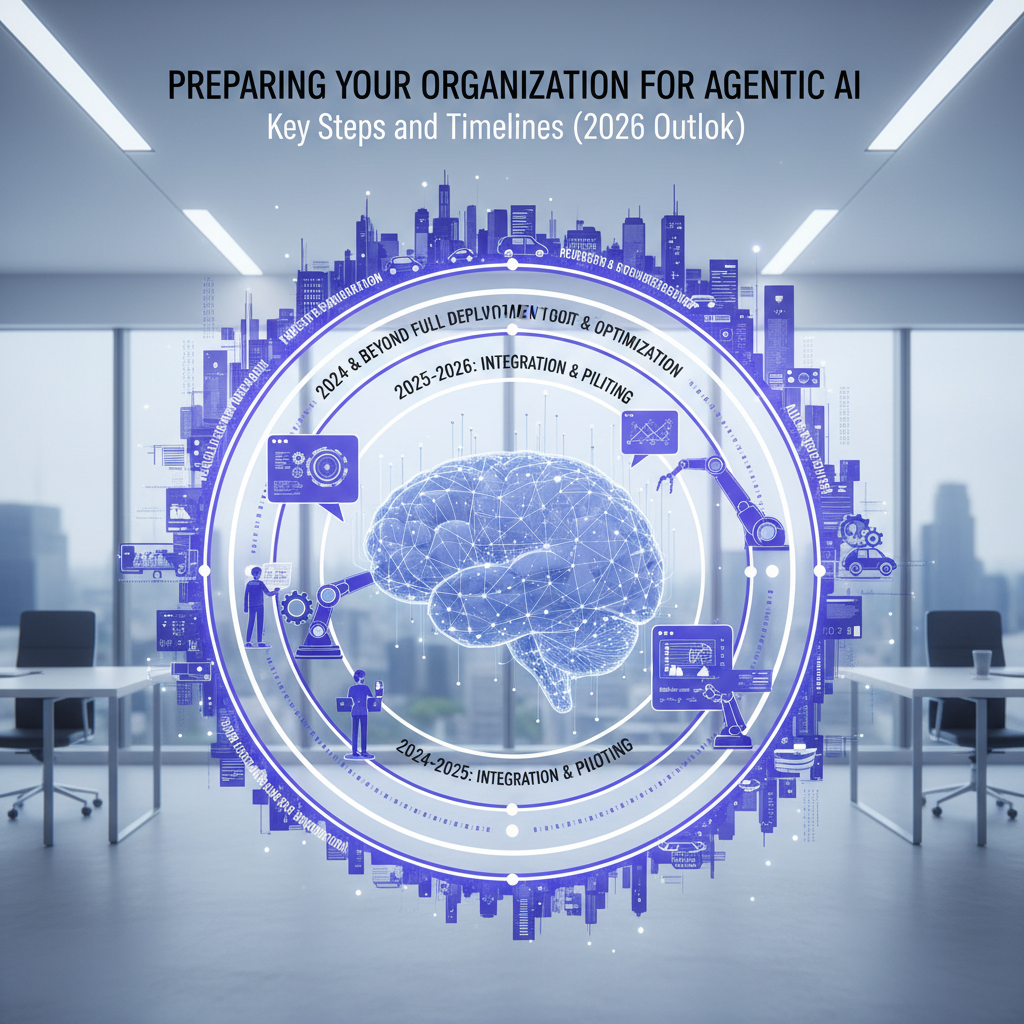
The 2026 Outlook: An Expanding Agentic AI Timeline
By 2026, Agentic AI is moving beyond proof-of-concept into real-world, scalable applications across industries. We’re seeing more sophisticated reasoning capabilities, multi-agent systems collaborating on complex problems, and a growing emphasis on explainable AI (XAI) to build trust and address regulatory concerns. Early adopters are already seeing significant competitive advantages, highlighting the urgency for others to strategize their entry.
Ready to Strategize Your Agentic AI Journey?
Agentic AI holds the key to unprecedented growth and efficiency for your enterprise. However, navigating its adoption successfully requires a clear strategy for measuring ROI and proactively managing risks. Don’t embark on this transformative journey alone.
Sita Infobytes specializes in helping businesses like yours understand, plan, and implement cutting-edge AI solutions. Reach out to us today to explore how our expertise can accelerate your Agentic AI adoption and ensure a secure, profitable future. We’re here to help you avail the best blog category services for your business needs.
Contact us through our form at: https://sitainfobytes.com/contact_us/