Preparing Your Enterprise for Agentic AI: Key Steps and Timeline
As we navigate through 2026, the buzz around Artificial Intelligence is intensifying, particularly concerning a transformative frontier: Agentic AI. Unlike traditional AI that primarily executes predefined tasks, Agentic AI systems are designed to autonomously reason, plan, and execute multi-step tasks to achieve a high-level goal, often interacting with other agents or systems along the way. Think of them as intelligent, digital problem-solvers capable of self-correction and adaptation.
For enterprises, this isn’t just another tech upgrade; it’s a paradigm shift promising unprecedented levels of efficiency, innovation, and strategic advantage. But how do you prepare your organization for such a profound change? Let’s explore the key steps and a realistic timeline for Agentic AI adoption.
Why Agentic AI Demands Your Attention Now
The transition to Agentic AI isn’t a distant future; it’s rapidly becoming a competitive necessity. Here’s why:
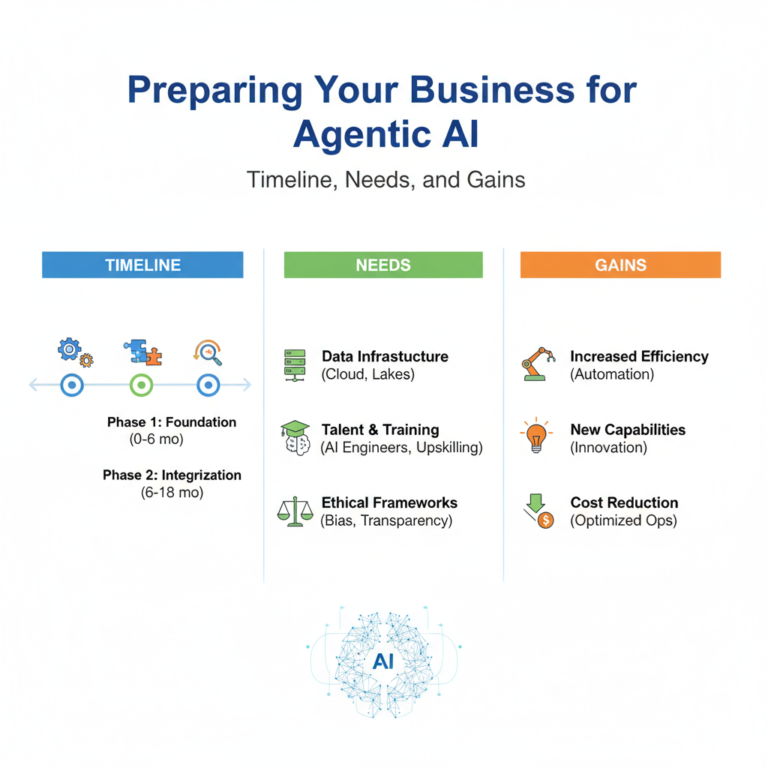
- Enhanced Efficiency: Automate complex workflows, freeing human talent for higher-value, creative tasks.
- Accelerated Innovation: Agents can explore solution spaces, generate hypotheses, and test ideas much faster than traditional methods.
- Personalized Experiences: Deliver highly tailored customer interactions and services at scale.
- Resilience & Adaptability: Systems that can autonomously react to changing conditions and self-optimize.
The Journey to Agentic AI: Key Phases and Timeline
Embracing Agentic AI is a strategic, multi-year endeavor. It requires careful planning, robust infrastructure, and a culture of innovation. Here’s a phased approach for your enterprise’s readiness:
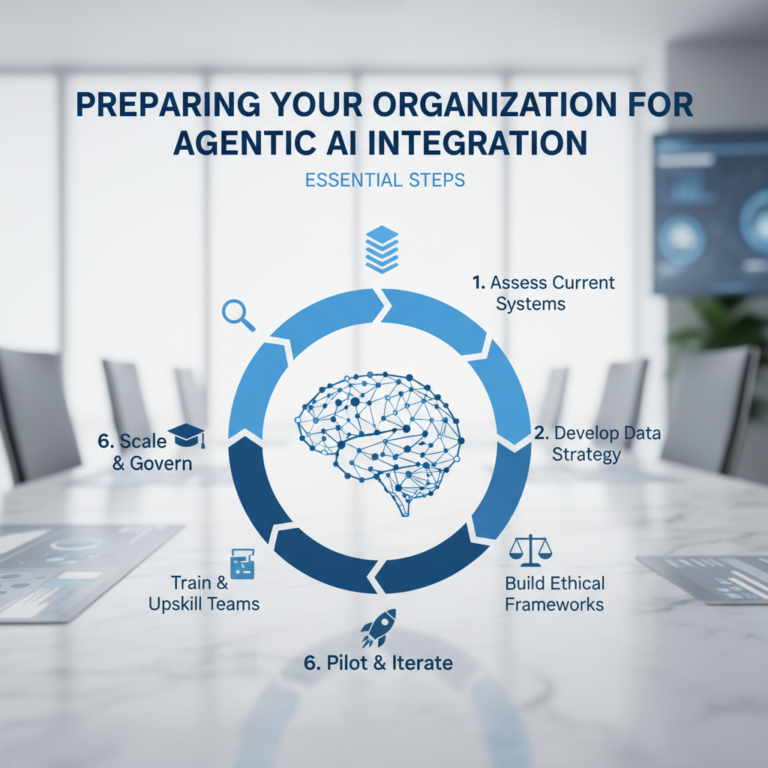
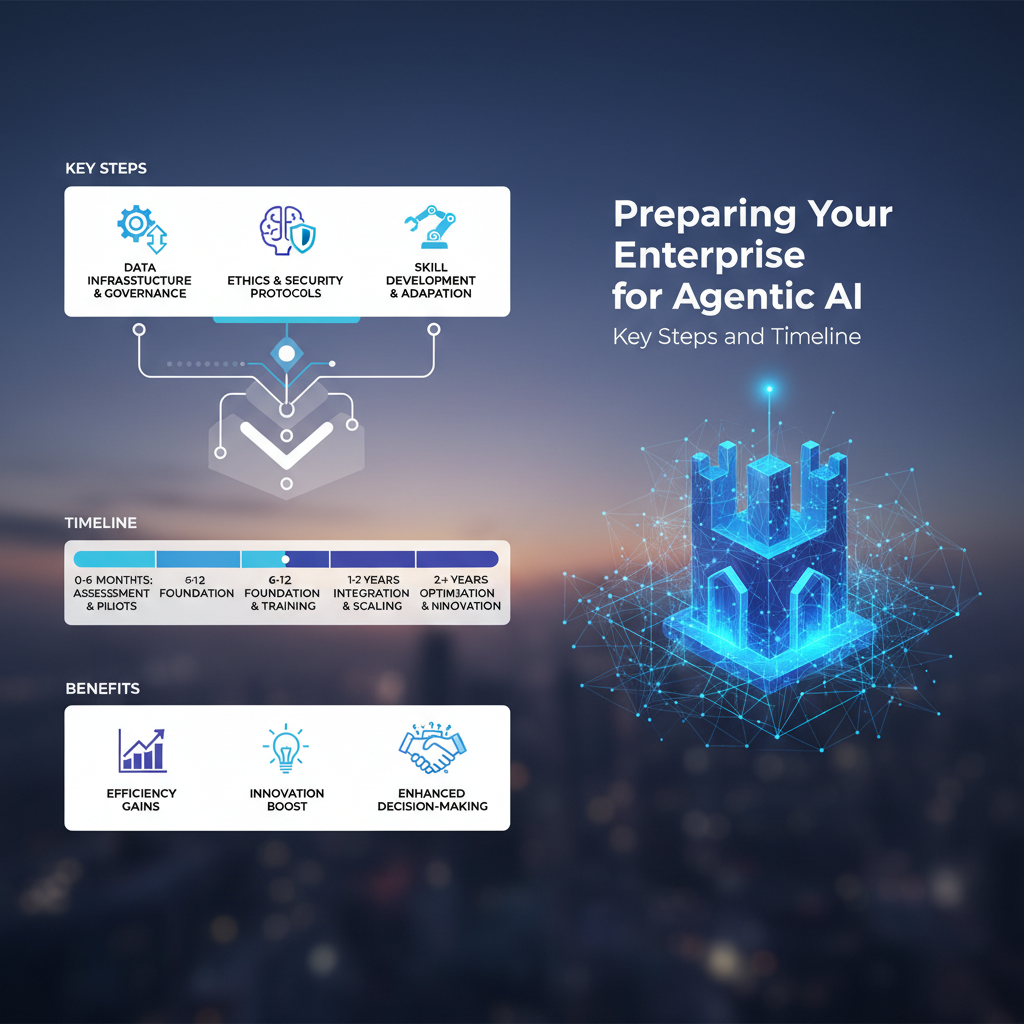
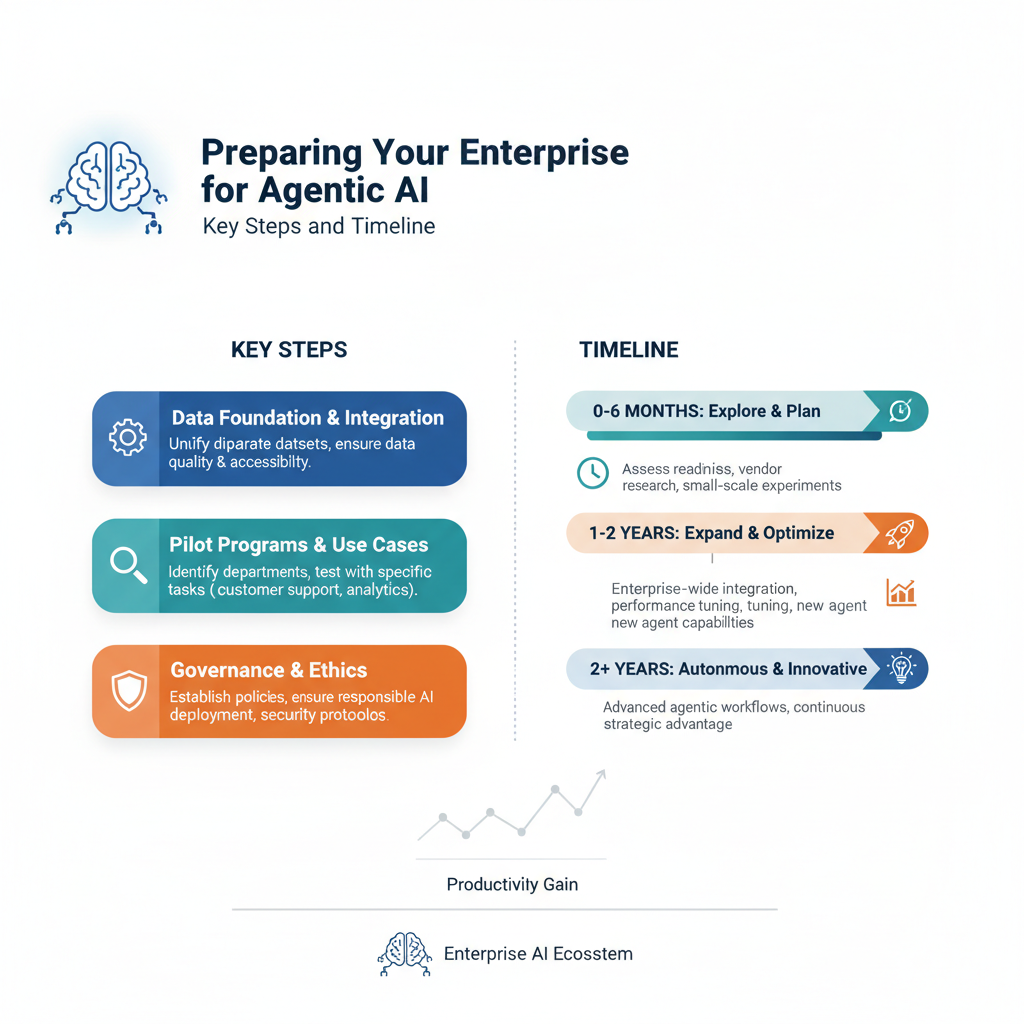
Phase 1: Foundation & Strategy (Current – Next 6-12 Months)
This initial phase is about building the bedrock for your Agentic AI initiatives. It’s less about deployment and more about strategic foresight and preparation.
- Strategic Vision & Use Case Identification: Begin by identifying high-impact areas where Agentic AI can deliver significant value. Where are your current bottlenecks? What repetitive, complex tasks could benefit most? Focus on 2-3 pilot candidates.
- Data Readiness Assessment & Governance: Agentic AI thrives on clean, accessible, and well-governed data. Audit your existing data infrastructure, identify gaps, and establish robust data pipelines and governance frameworks.
- Talent & Skill Development: Upskill your teams in AI literacy, prompt engineering, data science, and ethical AI principles. Consider forming a dedicated "AI Center of Excellence" or task force.
- Ethical AI Frameworks: Proactively establish guidelines for responsible AI development and deployment, addressing bias, transparency, and accountability. This is critical for trust and compliance.
- Infrastructure Evaluation: Assess your current computing power, cloud capabilities, and integration needs. Agentic AI can be resource-intensive.
Phase 2: Pilot & Integration (Next 12-24 Months)
With a solid foundation, this phase focuses on proving the concept and integrating Agentic AI capabilities into your existing ecosystem.
- Pilot Project Execution: Start small with your identified high-impact use cases. Develop and deploy initial Agentic AI systems in a controlled environment. Focus on learning and iterative improvement.
- Integration with Existing Systems: Agentic AI agents will need to interact with your CRM, ERP, data lakes, and other enterprise applications. Plan for seamless API integrations and robust communication protocols.
- Security & Compliance by Design: Integrate security measures and compliance checks from the outset. Agentic systems handling sensitive data require meticulous attention to privacy and regulatory adherence.
- Vendor & Partnership Evaluation: Explore partnerships with AI solution providers or integrate open-source Agentic AI frameworks. Evaluate their capabilities, security, and scalability.
- Performance Monitoring & Iteration: Establish KPIs to measure the success of your pilot projects. Continuously monitor agent performance, gather feedback, and iterate on design and functionality.
Phase 3: Scaling & Optimization (24+ Months Onwards)
Once pilot projects prove successful, the focus shifts to enterprise-wide adoption and continuous enhancement.
- Phased Rollout: Gradually expand Agentic AI deployments across different departments and functions, learning from each implementation.
- Continuous Learning & Adaptation: Agentic AI systems are designed to learn. Establish mechanisms for continuous feedback loops, retraining, and adaptation to evolving business needs and market conditions.
- Operationalizing AI Governance: Expand your ethical and governance frameworks to cover all deployed Agentic AI systems, ensuring ongoing compliance and responsible use.
- Future-Proofing & Innovation: Keep an eye on emerging AI technologies and advancements. Plan for how your Agentic AI infrastructure can evolve to incorporate new capabilities and maintain a competitive edge.
Overcoming Common Challenges
The journey won’t be without hurdles. Be prepared to address:
- Data Quality & Availability: Inadequate or siloed data can cripple Agentic AI.
- Talent Gap: A shortage of skilled AI engineers and data scientists.
- Ethical & Regulatory Concerns: Navigating complex issues of bias, privacy, and accountability.
- Integration Complexity: Ensuring seamless operation with legacy systems.
- Cultural Resistance: Overcoming skepticism and fostering an AI-first mindset.
Your Partner in AI Transformation
Preparing your enterprise for Agentic AI is a complex yet rewarding journey. At Sita Infobytes, we specialize in guiding businesses through this transformative process, from strategic planning and infrastructure readiness to ethical frameworks and successful deployment. Our expertise ensures you harness the full potential of Agentic AI while mitigating risks.
Ready to embark on your Agentic AI journey and secure your competitive edge? Reach out to us through our contact us page today to discuss how we can tailor our services to your specific needs.